
CAMBODIA

Cambodia may be a small country, but it offers everything one needs for a wonderful vacation. Above the many reasons why most visitors return to visit time and again, are two that many would find difficult to match elsewhere. Firstly, Cambodia offers an incredible amount of history and culture and its nature is simply amazing to say the least; ranging from the gorgeous National Parks to the pristine beaches and relaxing islands, the flavours of Cambodia are not only in the exotic cuisines, but also its overall ambience. If you’re planning to visit Southeast Asia, Cambodia is certainly a ‘Must-visit’ destination.
MONDULKIRI
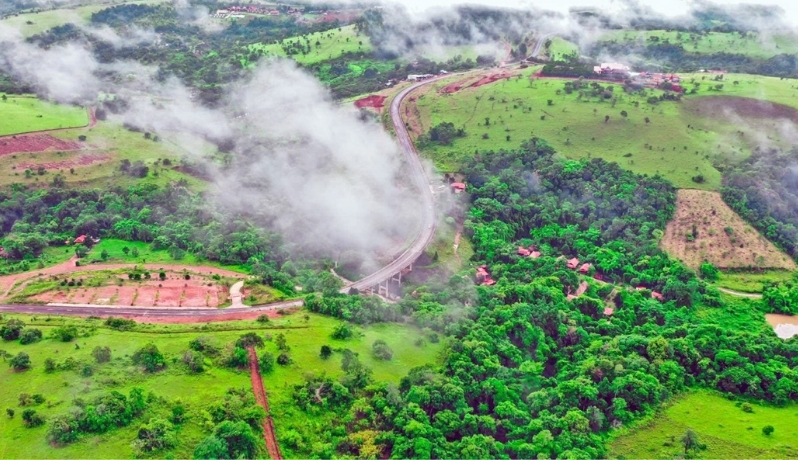
Mondulkiri is about 543km north of Phnom Penh. Despite being the largest inland area; Mondulkiri is one of the most sparsely populated provinces in the country and can be reached by land or by air. Mondul Kiri is very rich in natural resources especially hard minerals such as gold and gems which can be found in all five districts of the province. Known also for its forested hills and beautiful waterfalls, Mondulkiri is one of the most popular destinations for Eco-tourism in Cambodia. More than 80 percent of the population in Mondul Kiri is made up of tribal minorities; the majority of them being from the Phnong tribe. Tourists are invited to participate in a wine-sipping tradition that dates back since the first visitors from the outside world visited the tribes many years ago. The wine is traditionally brewed from rice and stored in jars, some of which are more than a thousand years old. The remaining 20 percent are collectively made up of Khmer, Chinese, and Muslims. Tourists are fascinated by the traditional Phnong houses in which there are various types of traditional gongs and big jars which are more than a thousand years old. These Jars and gongs are among the most valuable possessions of indigenous communities both in traditional and spiritual as well as material terms. Get further off the beaten tracks and explore the northeastern frontier jungle of Mondulkiri safely on the back of an elephant. An elephant ride through lush unspoilt tropical rain forest where various large mammals, including dholes, bats, bears, wild cattle, buffaloes, deers, elephants, gaurs, gibbons, goats, horses, leopards, monkeys, otters, rabbits, tigers and wolves roam, offers one a memorable experience promised to last a lifetime. This kind of trekking creates jobs for local people and supports eco-tourism and a greener mode of transportation.
SIEM REAP
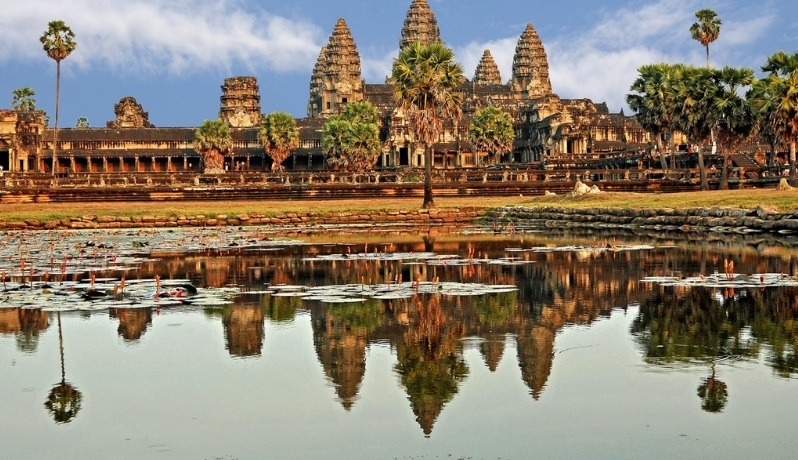
Siem Reap Province is basically the cradle of Angkorean civilization and it is a province that offers plenty of opportunity to tourists enthralled by the Khmer culture. The main route to the Angkor Wat The main route to the Angkor Wat Srah SrangSrah Srang The ruins of Angkor, located amid forests and Farland, are now a UNESCO World Heritage Site. There are over one thousand temples ranging in scale from nondescript piles of brick rubble scattered through rice fields to the magnificent Angkor Wat which is said to be the world’s largest single religious monument. There are dozens of temple ruins in the Siem Reap area and it depends largely on how much time one has and one’s level of interest to determine how long one should spend to explore them. This province is accessible on direct flights from many major cities in the region including Bangkok, Danang, Hanoi, Ho Chi Minh, Paksé, Vientiane, Kuala Lumpur, Singapore, Hong Kong, Kunming, Taipei, Manila, etc. From the capital of Phnom Penh, the Cambodia National Airline operates direct flights daily to and from Siem Reap. Siem Reap Province can also be reached by speedboats along the Tonlé Sap from Phnom Penh and Battambang Province. The Siem Reap Province is conveniently situated 314 km northwest of Phnom Penh, along National Road No 6. It can be reached all year round by National Road No 6 from Phnom Penh, Poipèt Border Checkpoint, Banteay Meanchey Province, Kampong Cham Province, and Kampong Thom Province; and by National Road No 5 and 6 from Kampong Chhnang Province, Pursat Province, and Battambang Province. This is a vibrant city with many modern hotels and old colonial buildings boasting awesome architecture. Much of the town’s image, culture, and traditions are conserved despite the influx of tourists from all over the world. There are restaurants of almost every culture and also bars and café of nearly every fashion and size all about town. The Psar Leu area is where one can find great bargains in jewelry and handicraft from precious stones to wonderful woodcarvings. There are also many shops offering traditional massage and reflexology to help relieve those tired feet after a day’s tour of the temples.
LANDMINE MUSEUM
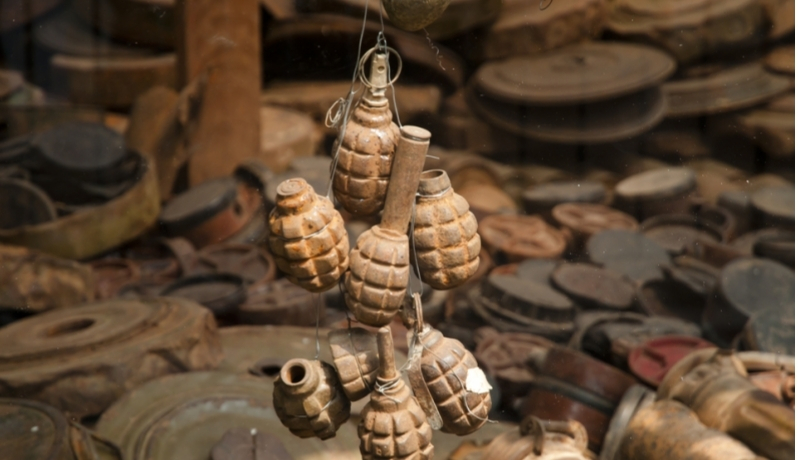
Landmine Museum It is situated on the way to Banteay Srei Temple, Siem Reap. It was founded by a veteran using most of his saving. He used to do the landmine removal work, so he has collected around 5000 removal landmines and wartime weapons displayed in the museum. There are also pictures and stories of victims and introduction about landmine removal work in the museum. Every Monday, Tuesday, Thursday and Friday, from 9:00 to 15:00, there are English, Japanese tour guides to let everyone understand more about the history of that period.